
Learn more about
our recent sustainability-related achievements
and our progress in developing a circular economy strategy
Our Sustainability report 2025
Creating value by going beyond compliance
For over a decade, we have been a sustainability frontrunner in our industry. We challenge ourselves every day to continue leading the way, focusing on our operations as well as relationships with our suppliers and customers. Our long standing engagement with EcoVadis reflects this commitment. After six consecutive years of Platinum ratings, Toyota Material Handling Europe achieved an EcoVadis Gold & carbon leader rating this year, placing us among the top 5% of over 150,000 companies assessed worldwide. This result confirms our strong sustainability foundations and our continued focus on progress beyond compliance.
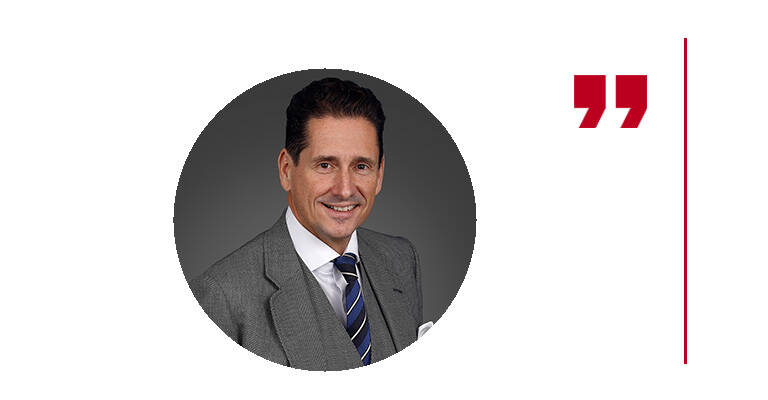
"On the road to net zero, we want to continue building a resilient supply chain and minimise risks by working closely with our suppliers and customers. Only through collaboration can we grow, innovate and remain humble."
Ernesto Domínguez
President and CEO, Toyota Material Handling Europe
Our approach to sustainability
Sustainability is a strategic priority for Toyota Material Handling Europe and a key driver of long-term value creation. In a complex global environment shaped by geopolitical uncertainty and evolving regulatory expectations, we continue to lead our industry by advancing climate action, strengthening governance, and fostering healthy and inclusive workplaces. Transparency and accountability underpin our approach and guide how we manage progress and challenges.
Despite this context, we are proud of the progress achieved to date, including continued advances on our journey towards net zero, increased transparency across our value chain, and sustained investment in our people. Since 2023, we have voluntarily aligned our sustainability reporting with the European Sustainability Reporting Standards (ESRS). Our 2025 Sustainability Report builds on this foundation, providing stakeholders with a clear and reliable update on our sustainability commitments and performance.
Our focus areas


Our strategic sustainability commitments
We integrate environmental, social, and governance (ESG) principles into our daily operations and culture. Based on analysis of current data, executive insights and stakeholder demands we set clear objectives for long-term value and compliance, with specific emphasis on climate action and social equity.
We contribute decisively to society’s quest to fight climate change through decarbonisation. We strive to reduce usage of finite resources through increased levels of circular economy.
Toyota Material Handling Europe will continue to provide high transparency related to material ESG issues including accountability on progress on targets
Toyota Material Handling Europe is committed to SBTi and published targets for FY31 and net zero across value chain by FY41
Toyota Material Handling Europe is actively working to deploy a smart circularity strategy to maximise use of assets & minimise pressure on raw materials
Toyota Material Handling Europe will continue to
collaborate closely with customers and truck operators aiming for Zero major forklift related accidents
Standardisation & Certification
Quality has always been more than a metric for us. From the very beginning, our commitment has been to deliver products and services that not only meet expectations but exceed them, while doing so with efficiency and care. Every step we take to eliminate waste and prevent errors is part of a larger journey: one where sustainability and excellence walk hand in hand.
Over time, our understanding of quality has expanded, evolving into a holistic mindset that considers the customer experience and the entire life cycle of what we create. More than simply ensuring a product meets specifications, it’s about anticipating needs and holding ourselves and our partners accountable.

This thinking is reflected in our dedication to ISO standards. Certification isn’t just a badge; it’s a framework that helps us align environmental and social responsibilities with operational efficiency. It demonstrates that our processes are built on safety, reliability and a deep respect for the communities we serve. And in a company with a decentralised business model, ISO provides the common language that unites us, ensuring consistency while allowing each entity the flexibility to thrive.

To ensure a systematic approach and to build trust, companies need to get their management systems and structure as well as their strategies and targets validated by third-party bodies. By submitting our corporate climate targets to the SBTi we want to make sure that our commitments are in line with the latest climate science. Its validation is an important recognition.

Every year we are assessed by EcoVadis in our performance and transparency across four key appraisal areas, including labour and human rights, environment, ethics, and sustainable procurement.
In essence, quality is not a destination but a continuous journey. It’s the thread that ties together our sustainability goals, our customer promises and our global responsibilities, shaping a future where excellence is the standard, not the exception.